
Updated
An ebb and flow system irrigates the surface from below instead of spraying water over the top. The water level in the arena's base layer is raised and lowered as needed, so the moisture reaches the whole arena evenly. Here we explain how the system works, what it requires of the arena build-up and when it is the right choice.
How does ebb and flow work?
Beneath the surface there is a sealed layer, usually a sheet or a membrane, that holds the water in the arena build-up. In the base layer there is a pipe system that both distributes and drains water. A control well beside the arena sets how high the water stands.
When the level is raised, the base layer fills and the moisture rises into the top layer. When the level is lowered, the excess flows back and the surface dries out. By choosing the level you control how moist the arena becomes.
Advantages compared with overhead irrigation
- Even moisture across the whole surface, without wet patches or dry edges
- Less dust and a steadier grip for the horse
- Less evaporation because the water is supplied from below
- Rainwater can be captured in the arena build-up
- Irrigation is not affected by wind and sun
What does it take to build?
Ebb and flow is planned in when the arena is built or rebuilt, because the sealed layer and the pipes lie beneath the base layer. The arena must be built with carefully levelled heights, otherwise the moisture will be uneven across the surface.
The top surface needs to be able to draw moisture upward, so the choice of material is made together with the system. You also need a water source, for example your own well, municipal water or collected rainwater.
Is ebb and flow right for our arena?
The system suits outdoor arenas and paddocks where even moisture and economical water use matter. It can also be used in indoor arenas, as a replacement for or complement to ceiling irrigation.
If an existing arena is going to be rebuilt, it is a good time to review the irrigation. If the arena is not going to be rebuilt, overhead irrigation is usually the simpler option.
How a project works
We start with a conversation about the size of the arena, how it is used and the conditions on site. We then design the build-up, piping and control and submit a proposal. After installation we go through how the water level is controlled, so that you can keep the right moisture yourselves.
Read on
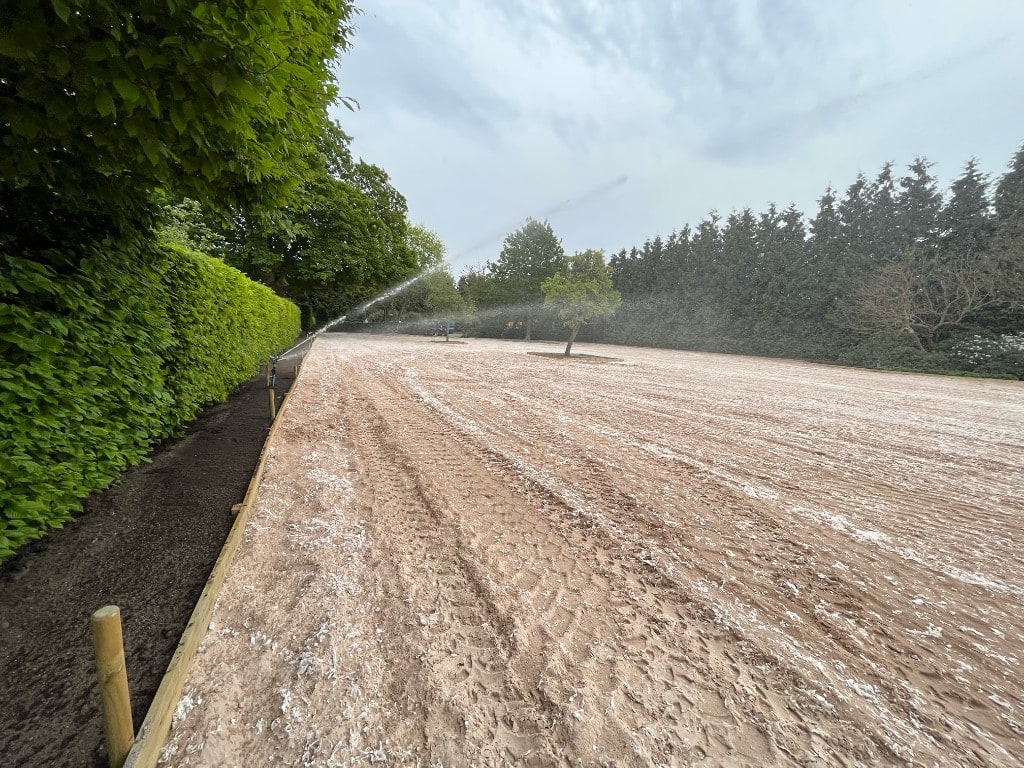
Irrigation
Ebb and flow is one of the irrigation solutions for arenas and paddocks.
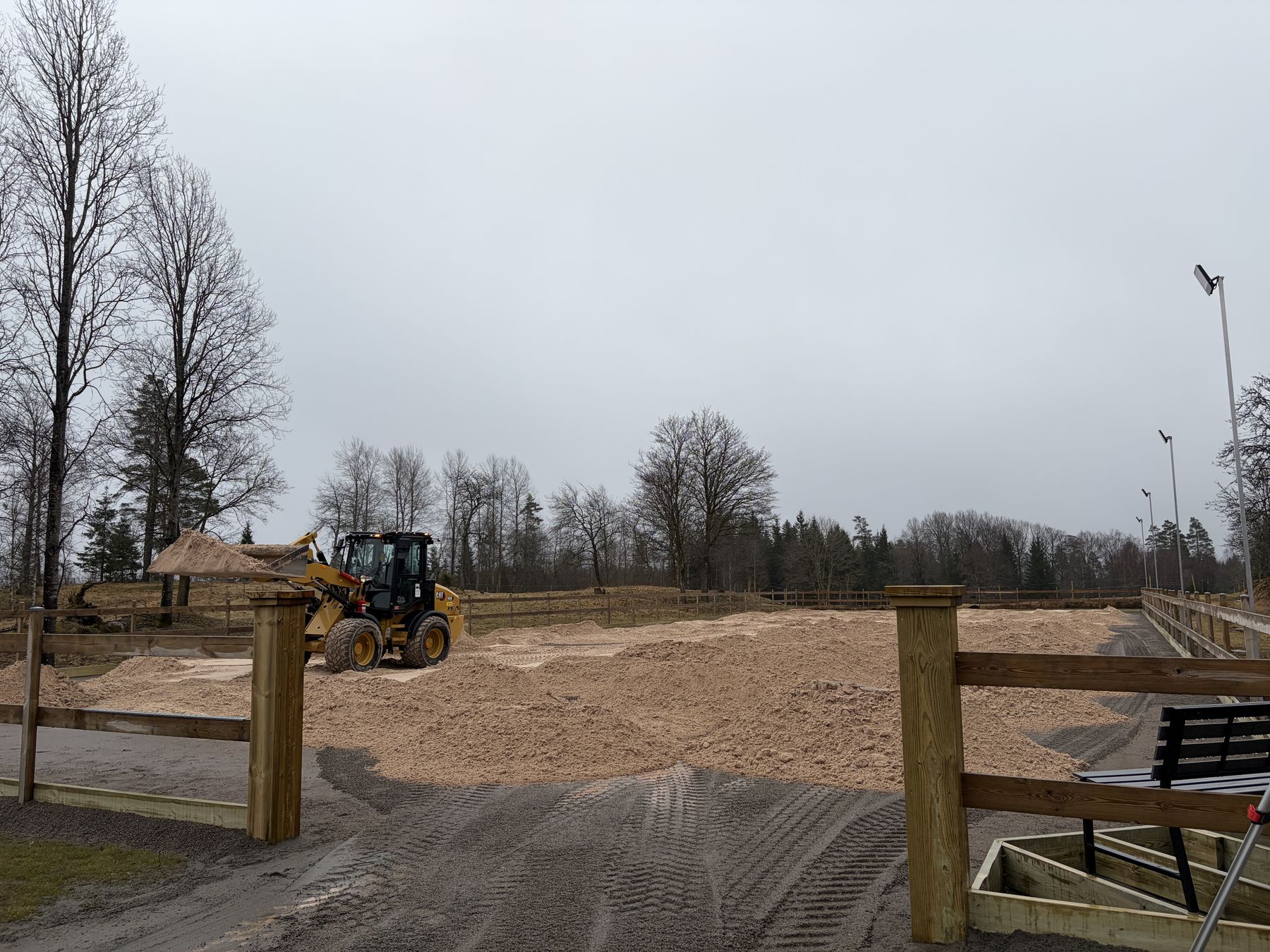
Building a riding arena
The questions to go through when planning a new arena.
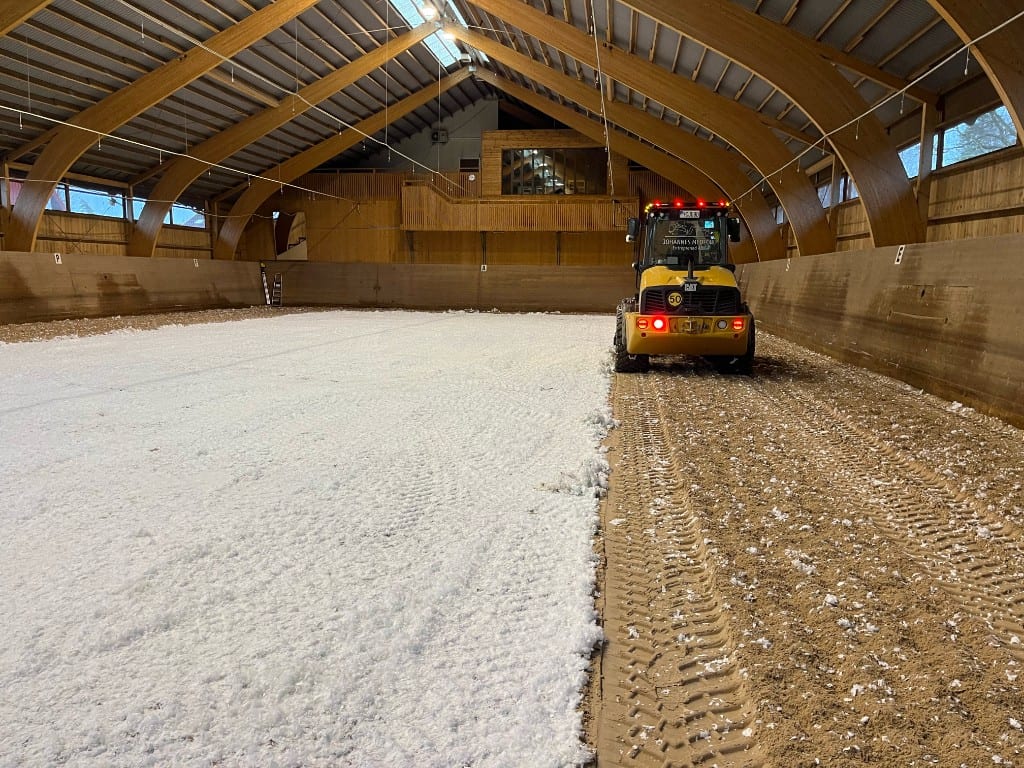
Choosing an arena surface
How to choose a top surface based on use, water and maintenance.
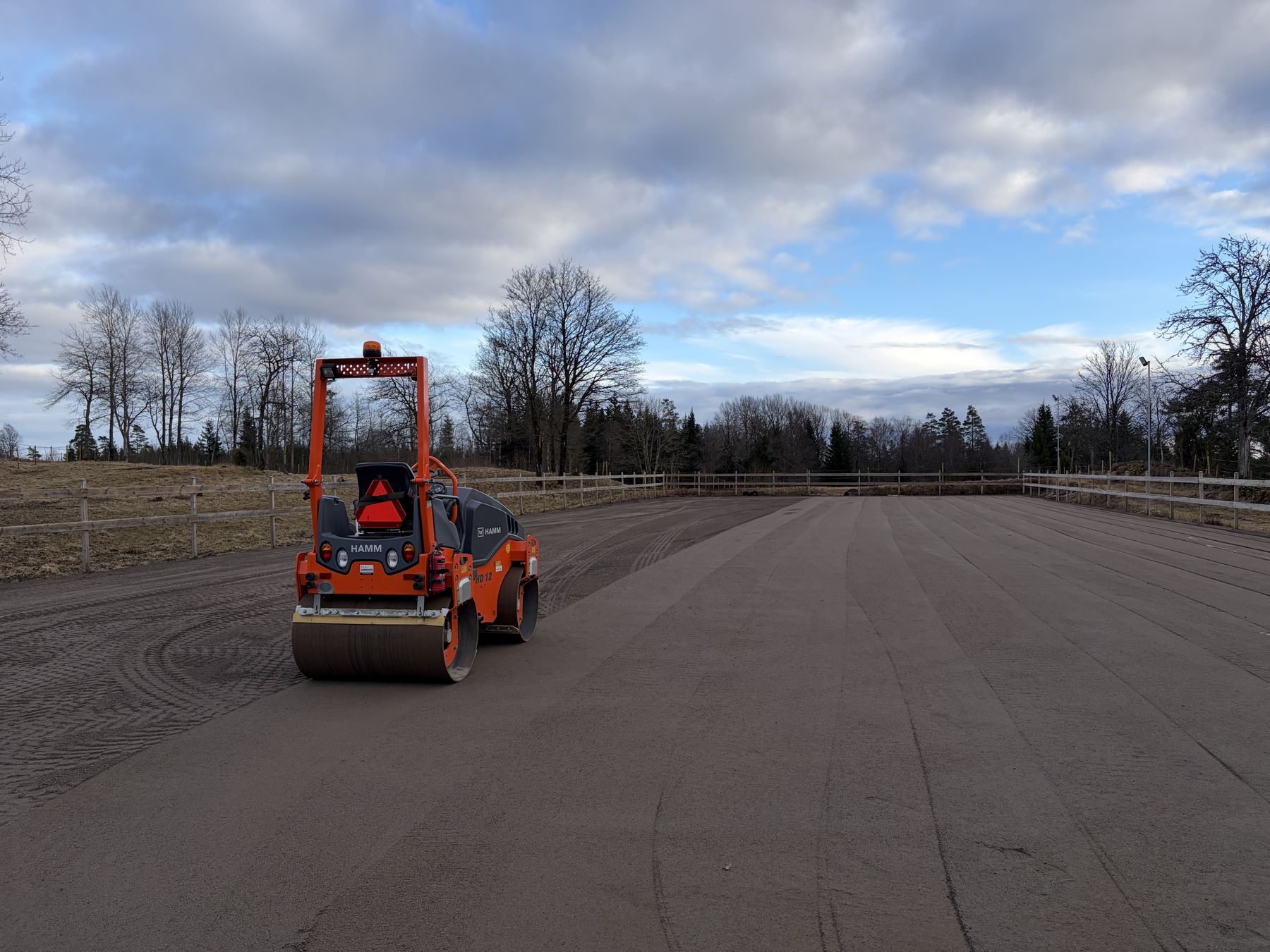
What does a riding arena cost?
Information for assessing the cost of an arena.
Frequently asked questions about ebb and flow
What is the difference between ebb and flow and regular irrigation?
Regular irrigation sprays water over the surface. Ebb and flow moistens the surface from below by controlling the water level in the base layer, which gives more even moisture and less evaporation.
Can an existing arena be rebuilt to ebb and flow?
Yes, but the sealed layer and the pipes lie beneath the base layer, so the arena usually has to be rebuilt. We assess what in the existing arena can be reused.
What does an ebb and flow system cost?
The price depends on the size of the arena, the ground conditions and whether the arena is new or being rebuilt. Describe your arena and we will come back with a proposal.
Is the surface maintained any differently?
The arena is harrowed and maintained as usual. The difference is that the moisture is controlled with the water level instead of with overhead irrigation.